< Return to program overview
Panel 5
|
Dangerous dependencies
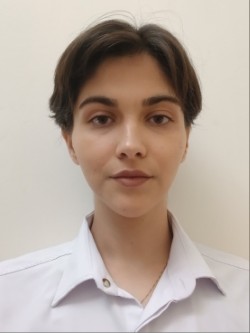
Fateme Dashtroo
Fateme Dashtroo is a M.A. graduate in International Political Economy at Shahid Beheshti University, Tehran, and currently works as a Policy Analyst at the Atlas Institute for International Affairs, where she writes analytical reports on energy and security issues in the Middle East. Her research interests include energy politics, international political economy, regional security, and the political economy of the Middle East. She has published research on cooperation and competition over shared gas-fields and climate policies in the Persian Gulf, as well as policy-oriented analyses of energy markets and geopolitical developments.
Cybersecurity and Asymmetric Dependency: A Global Political Economy Analysis of UAE-US Cooperation, 2020-2026
Cyber security in the contemporary order has moved beyond the technical domain of network protection to become one of the main fields of nexus among security, power, technology, and dependency in the global political economy. Focusing on the cyber cooperation of the UAE and the US in the period 2020-2026, this study aims to show how the efforts of a small but capital-intensive state to increase its cyber defense capabilities and infrastructure resilience are taking shape in an asymmetrical relationship with a technological power. The main question of this study is whether this cooperation has led to a reduction in vulnerability and increased security independence for the UAE, or has it reproduced a more complex dependence on American technologies, standards, and knowledge. The hypothesis is that UAE’s cyber cooperation with the USA, while increasing its defense capability and security credibility, it also strengthened its dependence on the USA. The theoretical framework is based on three concepts of the global political economy: security, structural power, and asymmetric dependency. The study analyzes cybersecurity as a field for organizing power, setting standards, and shaping the states’ security choices. The research method is a qualitative case study, and data are collected from official documents, cyber strategies, security reports, and academic literature. The study argues that UAE-US cooperation is an example of how small states manage the tension between building security capacity and structural dependency in the asymmetric dependency of the global political economy